Anxious Attachment Therapy
Relationships can sometimes bring up intense emotions that feel difficult to manage. You may find yourself worrying about whether a partner will pull away, replaying conversations in your mind, or feeling overwhelmed by the fear of losing someone important to you. These experiences are often connected to patterns known as anxious attachment.
Therapy can help bring greater awareness to these patterns while supporting you in developing new ways of relating to yourself and others. Together, we explore how attachment dynamics influence your emotional responses and relationship behaviours, while building skills that support emotional regulation, communication, and self-trust.
What is anxious attachment?
Anxious attachment can develop when early experiences shape how we learn to seek connection, safety, and reassurance. This style often occurs from inconsistent caregiving, the adult provides too much stimulation at times, and not enough at others. When growing up in an environment where the parent is both warm and cold, a child learns to not be able to predict their response and this leads to emotional unpredictability. Often times, the child doesn’t learn to regulate their own emotions due to their parent’’s own emotional distress and dis-regulation. This often leads the child feeling
Therapy for Anxious Attachment

Signs of Anxious Attachment in Relationships
Intrusive behaviours: checking a partners phone, looking through their belongings, showing up unannounced
Unable to distinguish safety: stuck in potentially abusive or unsafe relationship dynamics
Co-dependency: struggle having an individual identity outside of a relationship or their partner
Frantic pursuit of relief: engage in behaviours to relief anxiety, such as double texting, spam calling, sending paragraphs to explain.
Focus on internal states: may feel overly emotional or connected to negative feelings.
Chasing behaviours: persistent, obsessive pursuit of a person, even if they do not reciprocate.
Fast attachment/idealization: fall for people quickly and very deeply
Panic at withdrawal/distance: discomfort at real or perceived distance or space from their partner
Obsessive thinking: constant, persistent and potentially negative thinking of a partner
How to Heal Anxious Attachment
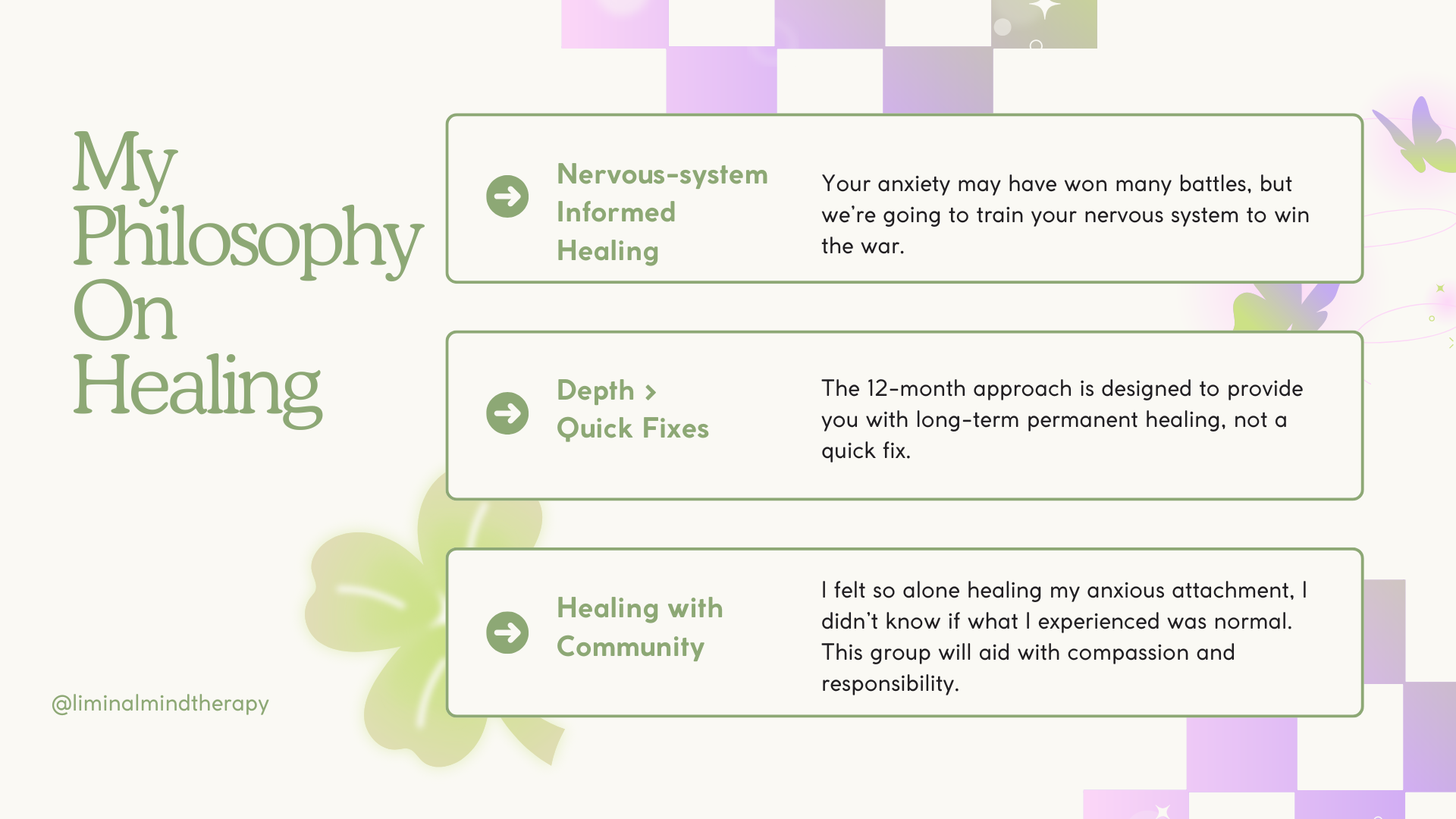
I’ve developed a 5 Phase roadmap to healing which can help you improve your anxious attachment style.
Over time, many clients begin to experience less anxiety in relationships, greater clarity about their needs, and a stronger sense of stability within themselves.
If you are noticing recurring patterns in your relationships and would like support in understanding them, therapy can provide a space to explore these dynamics and begin creating new possibilities.
Phase 1: Awareness
Understand your patterns & why they formed.
Tracking: Pay attention to what you think, say and do in relationships. Track when you get triggered, what your response was, and how the situation played out.
Mindfulness: Become more in-tune with yourself through a series of practices.
Phase 2: Stabilization
Build nervous system tools to reduce the panic response.
EFT Tapping: Learn the art of this scientifically backed methods of anxiety-regulation and get a custom routine for yourself.
Grounding Techniques: Practice using a variety of tools in situations of distress and notice which one regulates you the best.

Phase 3: Past Exploration
Revisit our past relationships and upbringing.
Past Exploration: Explore your core memories, relationship patterns and past experiences that play a role in your anxious attachment. Identify common themes and patterns. Work through past trauma.
Phase 4: Re-patterning
Develop new neural networks by engaging in new behaviours.
Core Belief & Values Work: Identify and change limiting core beliefs and develop a strong sense of values.
Identity Shift: Completely step into the secure person you want to be.


Phase 5: Integration
Learn secure communication, practice emotional flexibility and build tolerance for uncertainty.
Secure Communication: Learn and practice how to speak to your partner in a secure lens, and advocate for your needs calmly.
Let go of Control: Learn the ultimate way to detach and let go of anxiety.
What to expect in therapy:
Weekly
Sessions
8-12 week
structure
Custom treatment plan
Resources, guides & more
Pay as
you go
$145 CAD /
60 minutes
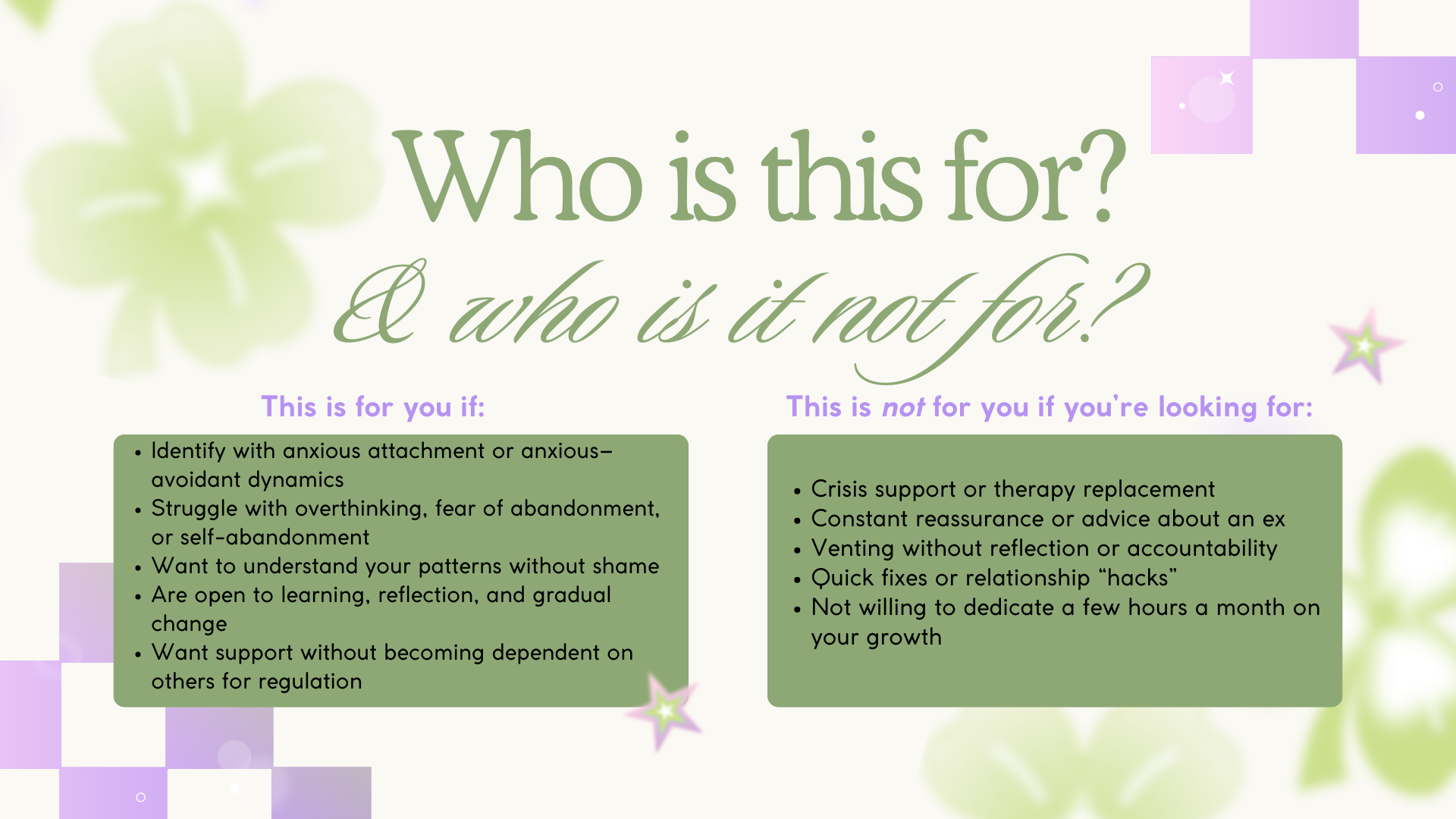
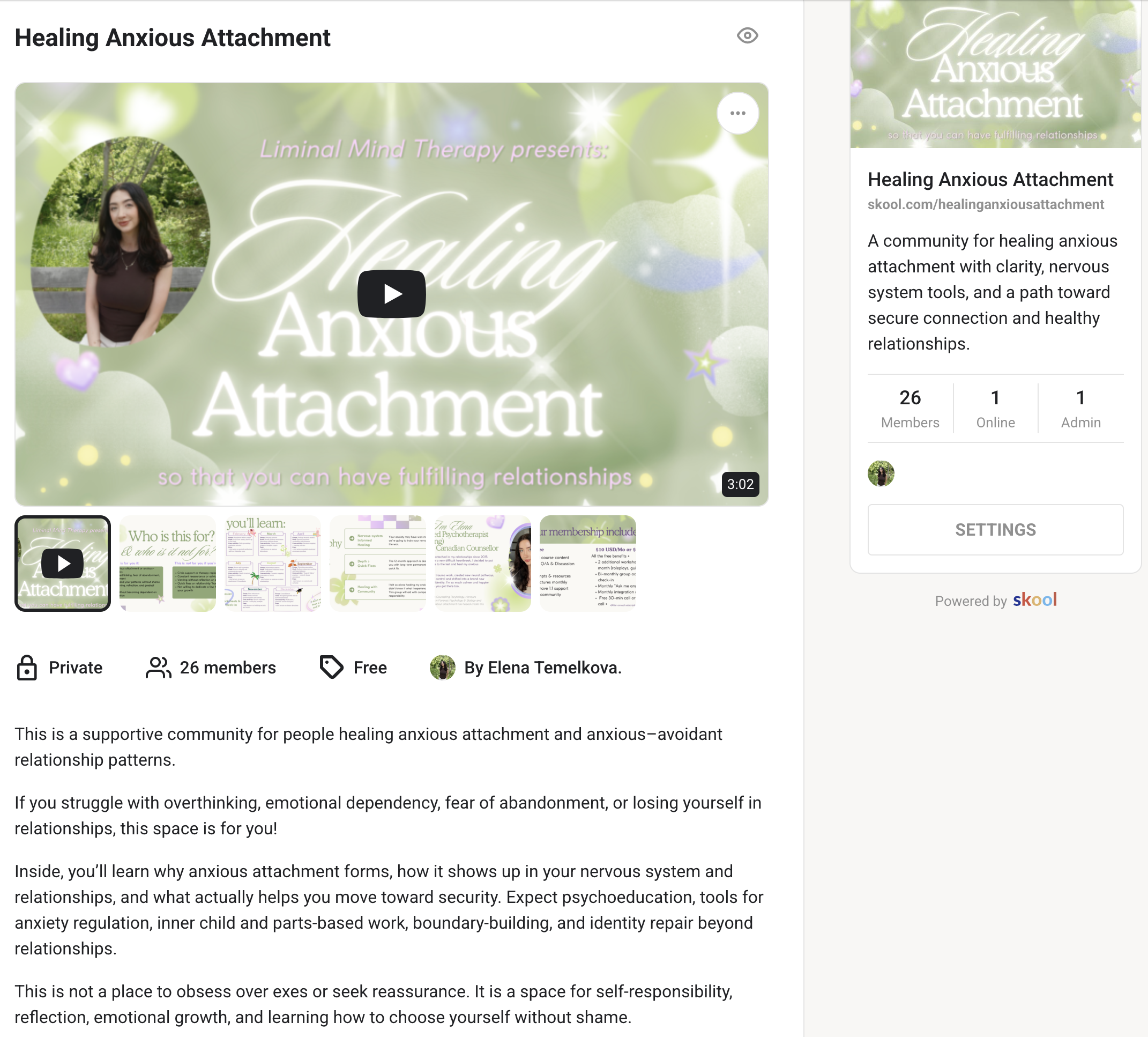
Join our free Skool Community: Healing Anxious Attachment